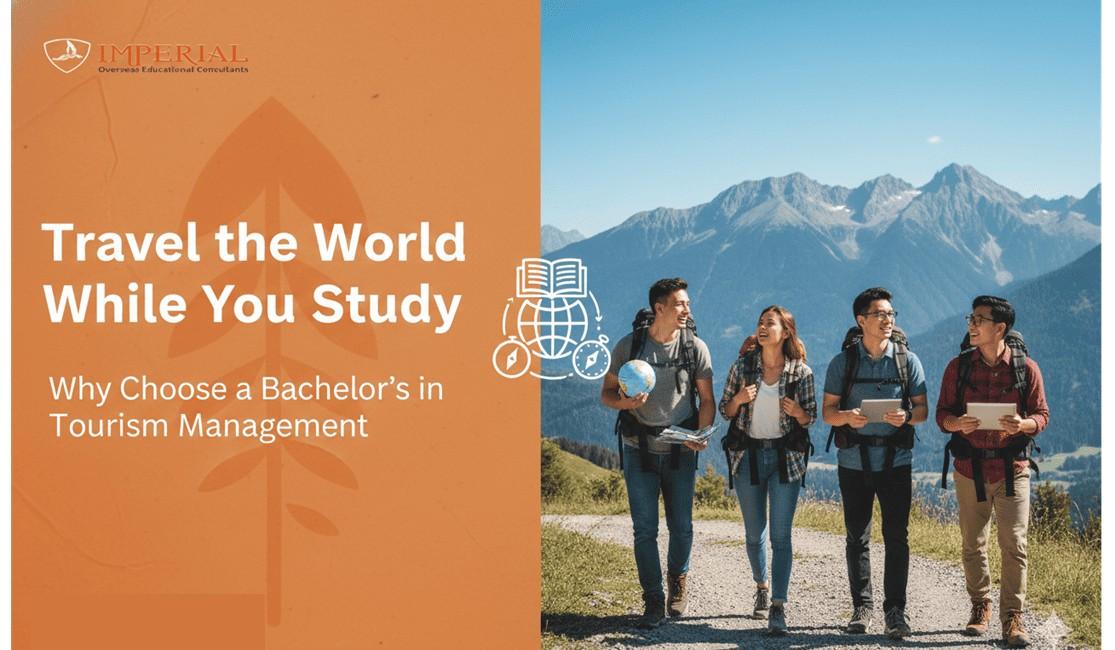
Travel the World While You Study: Why Choose a Bachelor’s in Tourism Management
Choosing a degree today means looking for global travel and hands-on skills. For Indian students who don’t want a desk job, a Bachelor’s in Tourism Management is a great choice. The classes combine business basics with training in travel and events. This degree focuses on getting you ready for work, making it easier to start a successful career anywhere in the world.
Is Tourism Management a Smart Career Choice for Indian Students?
Studying Tourism Management is a smart move for Indian students because it focuses on hands-on skills rather than just textbooks. It prepares you for international jobs in airlines, hotels, and events by teaching you exactly what employers are looking for.
Why It Makes Sense for Indian Students
- Direct alignment with the global service and travel industries
- Strong emphasis on internships, live projects, and work placements
- Better return on investment through skill-based employability
- Suitable for students seeking international work exposure early
- Transferable skills that remain valuable if returning to India
- Less dependence on licensing compared to regulated professions
What You Actually Learn and Why It Matters Internationally
Tourism Management is a much more comprehensive subject than just travelling. It essentially revolves around how global service businesses work with their operations, customer experience, sustainability, revenue management, and professional communication aspects.
Indian students will, therefore, experience a curriculum that imparts not only internationally accepted service standards but also cross-cultural teamwork and ethical workplace practices that are applicable worldwide.
What Makes These Skills Internationally Valuable
- Training aligned with global hospitality and tourism standards
- Strong focus on customer experience and service quality
- Exposure to sustainable tourism and responsible business practices
- Development of business communication and interpersonal skills
- Industry-designed curricula that improve job readiness
- Skills transferable across countries and sectors
How Overseas Study Improves Career Outcomes
Choosing to study this program overseas gives access to structured internships and part-time work aligned with hospitality and tourism. This hands-on experience helps students learn about working in foreign settings early on.
Students planning to study bachelor in USA often consider tourism management because American universities offer strong industry partnerships and campus-based career services. Getting experience while you study in USA may affect your job prospects after you graduate, based on the rules for your visa and whether an employer pays for your studies.
Cost, Timelines, and Planning Considerations from India
People think tourism is easy, but it actually requires great people skills and the ability to handle emergencies. Students should also know that not all universities are equal; some offer much better internships and hands-on experience than others.
Cost and Planning Factors Indian Students Must Account For
- Tuition plus housing, insurance, food, and local travel expenses
- Impact of mandatory internships on part-time work eligibility
- Early preparation of education loans and proof of funds
- Scheduling of English tests and academic transcripts
- Visa appointment availability and processing timelines
- Risk of deferral leading to higher costs due to currency fluctuations
Common Misunderstandings Indian Students Should Avoid
Many people think tourism degrees are easy, but they actually require hard work, people skills, and quick thinking. It is also important to remember that not all schools are the same; the quality of internships and hands-on training varies greatly.
Common Mistakes Indian Students Should Avoid
- Assuming the course is “easy” or non-academic
- Believing travel is guaranteed without entry-level industry work
- Ignoring the importance of internships and practical modules
- Choosing universities without checking employer partnerships
- Overlooking communication and soft-skill requirements
- Not verifying on-campus and post-study work opportunities
How to Evaluate the Right University and Country Fit
Shortlisting should be based on the depth of the curriculum, the structure of the internship, the rules on visas, and the results of graduates. Ranks are not enough on their own. Look for universities that make work-integrated learning very clear.
Hiring trustworthy study abroad consultants in India can help you understand offer letters, cash needs, and rules for following through. With the right help, you’re less likely to pick a university that doesn’t fit your needs or goals.
FAQs Indian Students Commonly Ask
Yes. In the Indian event, aviation and hotel businesses, having worked abroad is very valuable, especially for management roles.
Many universities offer internships, but the ways they work are not all the same. Check the credit requirements and work hours every time.
At some universities, you might be able to take courses in events planning, travel operations, or hospitality, but it might not be easy to switch your major.
Usually not at the undergraduate level, though part-time or volunteer experience can strengthen applications.
It’s best to plan ahead 12 to 15 months to make sure you can meet all of your test, money, and visa dates.
The Next Step
Thinking about Tourism Management? It’s a great move for Indian students, but the logistics can be tricky. Don’t wing it, focus on picking the right program and staying on top of the rules. Reach out to someone who’s done it before; an advisor can save you a lot of stress (and money) when it comes to visas and college choices.