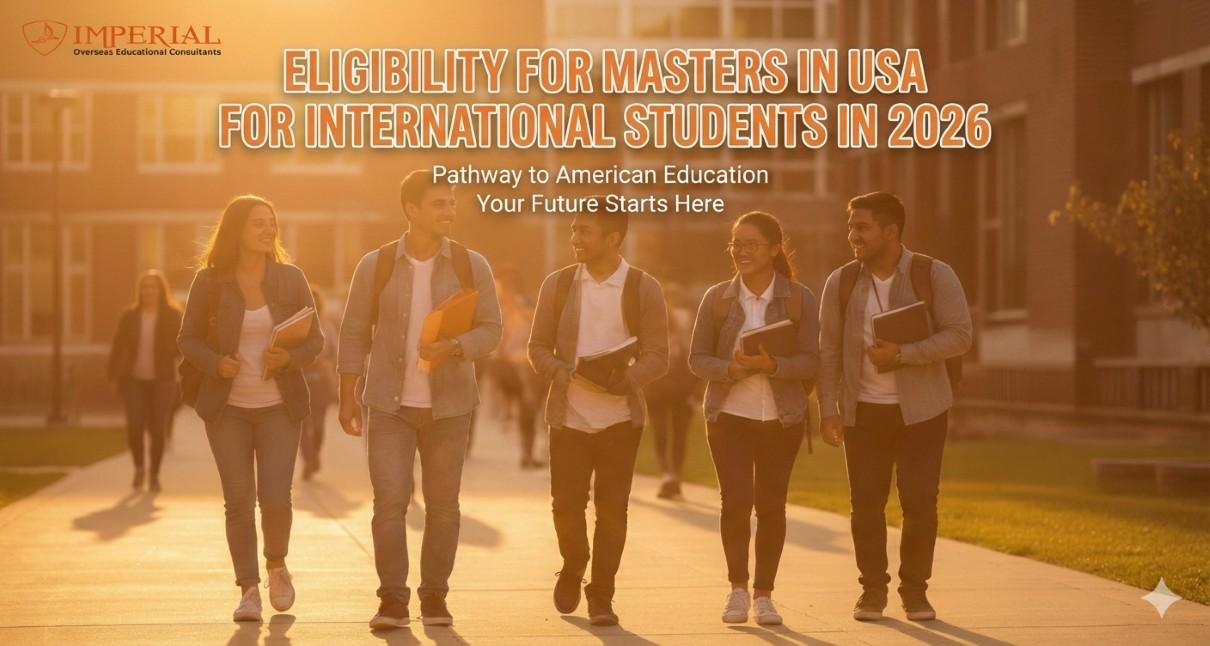
Eligibility for Masters in USA for International Students in 2026
Unsure whether you qualify for a US master’s degree in 2026? Eligibility varies by university, exams, finances, and timelines. This guide breaks down exactly what Indian students must check to avoid rejections, missed deadlines, and costly application mistakes.
Who Can Apply for a Master’s in USA in 2026?
Eligibility for a master’s degree in the USA is evaluated holistically, not through a single checklist. Indian students are generally assessed across academic background, test scores, financial readiness, and program fit.
Most colleges accept a three-or four year degree from India, but the subjects you studied really matter. Some Master’s programs let you join from a related field, while others require specific classes. Also, keep in mind that having too many recent backlogs can make it harder to get accepted.
What to do: Make a shortlist of programs, then check the academic requirements for each area.
GPA Expectations and Indian Marks Evaluation
US colleges do not all have the same GPA cut-off. Each university in India converts percentages on its own.
- Many good programs look for at least a 3.0 GPA (on a 4.0 scale).
- If you are still in college, you can apply now using your provisional transcripts.
- Good internships and real-world projects can make up for a GPA that isn’t ideal.
Don’t assume you won’t get in. Check the “Eligibility” page for every university on your list.
English Language Test Requirements in 2026
Accepted Exams: You can usually submit scores from IELTS (Minimum accepted: 6.0 – 6.5 overall), TOEFL iBT (Minimum accepted: 70 – 80), or Duolingo (Minimum accepted: 95 – 110), depending on what your university prefers.
Waivers: Some schools waive these tests for Indian students, but the rules are different everywhere.
Next Step: Never assume you have a waiver. Check the university’s website directly to see exactly what you need to submit.
GRE Requirement, Is It Still Needed?
For 2026, GRE rules are still not set in stone.
- The GRE is not irrelevant to many in university, but optional.
- A strong GRE score can strengthen applications with average academics
- Some grants still need GRE scores.
What to do: Decide based on your target universities, not general trends.
Financial Eligibility and Proof of Funds
Before you can apply for your visa, your university must verify your funding. You must show access to funds that cover the “Total Estimated Cost” on your I-20. Whether you rely on family savings or a student loan, ensure these funds are “liquid” and ready to be shown.
Since loan verification is often the longest part of the process, start your financial “pre-work” now to ensure your I-20 arrives as soon as you are admitted. Check if your target university has a specific “Affidavit of Support” form for sponsors.
Common Eligibility Mistakes Indian Students Make
Many rejections occur due to avoidable errors:
- Assuming eligibility rules are the same across universities
- Ignoring topics that are required
- Putting off a document that has to do with money
- If you rely only on information from web forums
What to do: Cross-check every requirement from official sources.
FAQs: Eligibility for Masters in USA (2026)
Yes, a lot of colleges accept it, but it depends on the university.
No, but it might be harder to compete if there are a lot of old or new backlogs.
Waivers occur but not always. They need to be checked.
Yes, provisional documents are okay with most colleges.
Conclusion and Next Step
Successful 2026 US Master’s admissions are built on four pillars: academic fit, verified documentation, standardized test performance, and early financial solvency. Verifying your eligibility early takes the stress out of the process and helps you avoid unexpected setbacks.
Try to keep your GPA above 3.0 (7.0 CGPA) and have your proof of funds organized at least six months before you head to the embassy. Contact our dedicated team of expert counsellors and university representatives to evaluate your profile and build a personalized timeline for your 2026 admission journey.