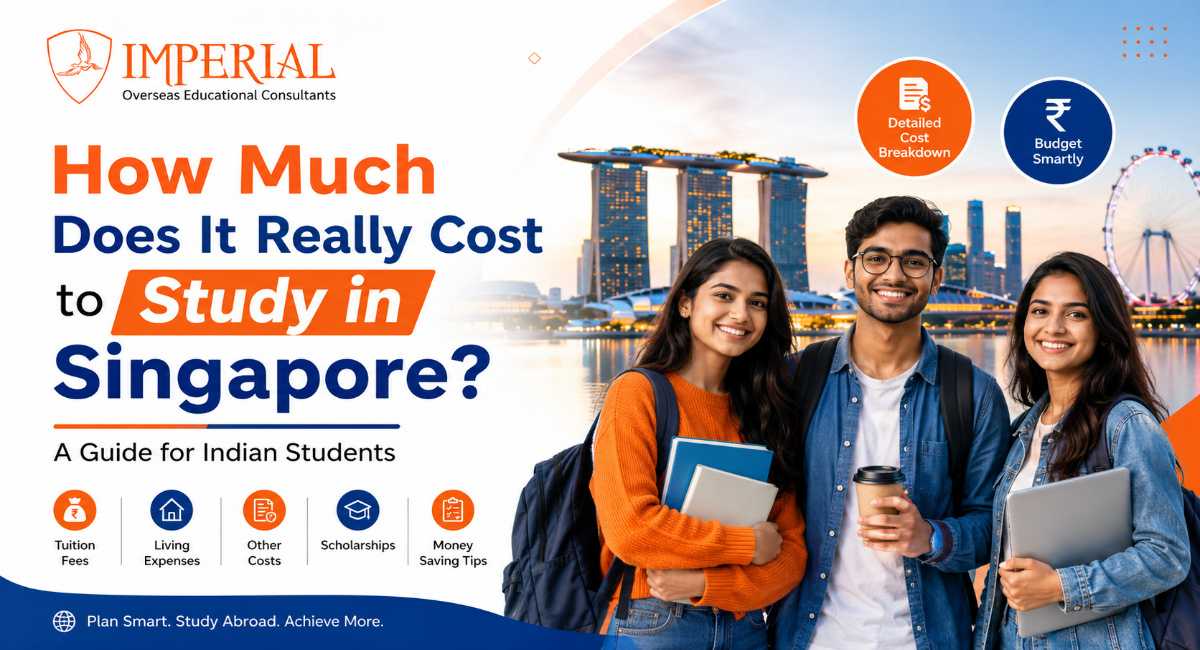
How Much Does It Really Cost to Study in Singapore? A Guide for Indian Students
Singapore is still a top pick for Indian students today. It offers modern facilities and a lively culture. However, the big question is always about the cost of study in Singapore. Knowing the actual numbers is important for a smooth academic journey. This guide explains the full cost. Keep reading to plan your budget better.
Cost of Study in Singapore for Indian Students
Your total cost will change depending on your university and course. Public university fees are lower than private ones.
They receive government subsidies which can lower the price significantly. International students can apply for these subsidies in exchange for a work bond. This bond requires you to work in a Singapore-based company for three years. Without the subsidy, the study in Singapore will be much more expensive.
Let’s now look at the specific figures for the cost of study in Singapore for Indian students you might encounter.
Tuition Fees in Singapore Universities
While basic undergraduate degrees in public universities start around 17,500 SGD, high-demand masters and specialized bachelor programs have seen updates:
- Public University Bachelors: Ranges from 18,900 to 38,000 SGD (excluding Medicine/Law).
- Public University Masters: Specialized MSc programs (like AI or Data Science) now average 45,000 to 65,000 SGD.
- Private Institutions: Partner programs (e.g., SIM-UOL or Kaplan) generally range from 15,000 to 45,000 SGD per year.
Living Expenses for Students
The monthly living costs you should expect while you study in Singapore are:
- Rent for a shared room is approximately 700-1300 SGD.
- Food expenses are between 450 and 800 SGD per month.
- Public transport passes generally cost around 100 SGD.
- Leisure and personal costs may consume 200 to 300 SGD.
Additional Expenses You Should Not Ignore
Many students do not plan for smaller recurring expenses. Health insurance is mandatory for all international students in Singapore. You also need to pay for your Student Pass application and issuance. These administrative fees are quite high when you are just starting out with your first semester. Always have some amount set aside as an emergency fund to cover the total cost of study in Singapore.
Textbooks and study materials may also be expensive. A lot of students purchase second-hand books or access digital versions in order to save money. You may also require a new laptop that meets your course needs. Other monthly expenses include mobile phone plans and home internet. Airfare for visiting home during holidays is a major part of the study in Singapore for Indian students budget.
The key additional costs to keep in mind:
- Student’s Pass fees are about 90-120 SGD.
- Medical insurance is normally 100 to 200 SGD annually.
- Books and stationery might require 400 to 600 SGD per year.
- Initial settling-in costs can range from 500 to 1,000 SGD.
Scholarships and Financial Aid Options
Financial aid reduces the total cost of study in Singapore. The government and individual universities offer various programs to attract talented international students. Most of these choices are based on academic excellence and others view your course of study. Some of the most well-known scholarship and aid programs are:
- MOE Tuition Grant Scheme
- ASEAN Undergraduate Scholarship
- NTU University Scholars Programme
- NUS Global Merit Scholarship
- SMU Star Scholarship
Mistakes Students Make When Calculating Their Budget
It is easy to overlook the small things when planning costs. Most students become preoccupied with the large figures and ignore the everyday expenses. You stay on track throughout your degree by avoiding these mistakes.
The common mistakes students make when calculating their budget are:
- Forgetting to include the 9% Goods and Services Tax on most purchases and services.
- Underestimating the initial security deposit for off-campus housing which is often one or two months of rent.
- Ignoring the cost of annual visa renewals and mandatory medical check-ups required by the government.
- Failing to account for high seasonal airfare when traveling back to India during peak holiday months.
- Relying solely on the maximum allowed part-time work hours to cover essential living expenses.
- Neglecting the hidden costs of bank transfer fees and poor exchange rates when receiving money from home.
- Assuming all private institutions allow students to work off-campus without specific training passes.
How Overseas Education Consultants Can Help?
Many face difficulties when navigating the application process to study in Singapore. Overseas education consultants have years of experience in guiding students and parents. They help you understand the total financial commitment. They also assist with the visa process.
The following are the key benefits of using professional guidance:
- You get accurate information about current tuition fees and grants.
- Experts help you prepare a strong scholarship application.
- They provide advice on finding affordable student accommodation.
- Consultants explain the long-term career benefits of different degrees.
- You receive assistance with financial documentation for your visa.
Final Thoughts
The financial aspect may seem overwhelming at first when calculating the study in Singapore for Indian students requirements, but ultimately it all comes down to wise decisions. With all of the excellent hawker food available and fast transport systems, the city is actually very navigable. Your degree you earn in Singapore is more than just a piece of paper. It will open up doors for you in the world’s strongest economies.
Do not wait anymore! Contact Imperial Overseas’s overseas education consultants and start applying today!