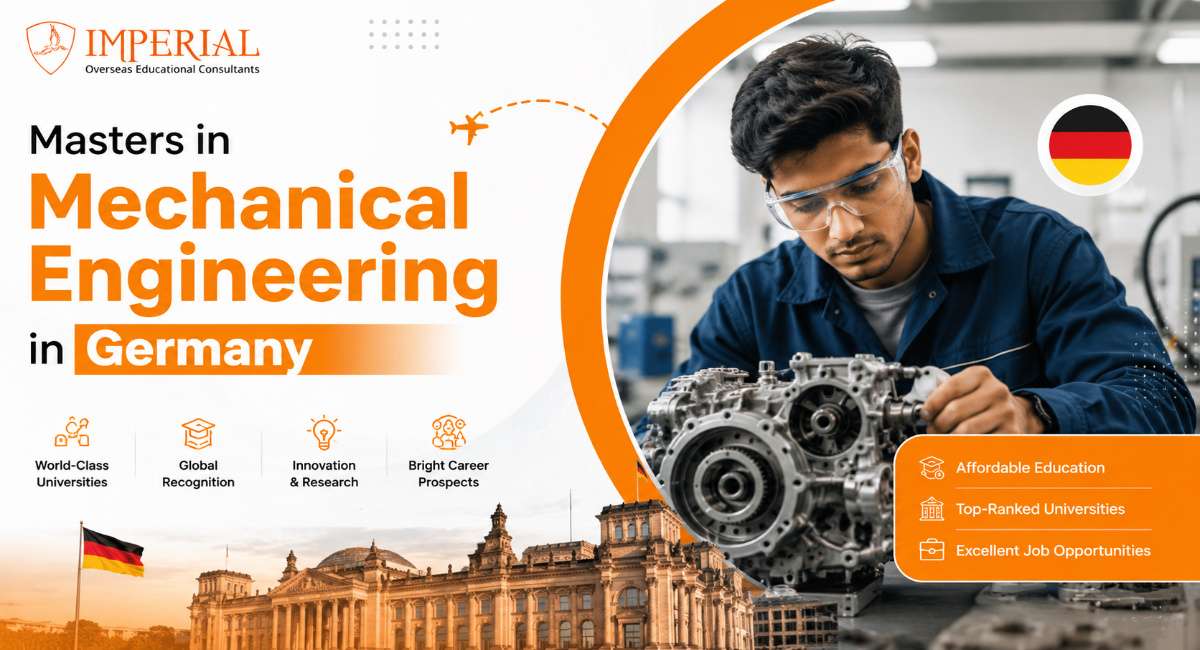
Masters in Mechanical Engineering in Germany: Benefits, Top Universities, Costs & Career Paths
A masters in mechanical engineering in Germany is one of the most rewarding study abroad programs. A degree in this program offers many benefits to students. There are many universities in Germany that offer this program. The best part is that the costs are very affordable, since public universities in Germany offer a no or low tuition education. In this blog, we will explore all these aspects about studying in this foreign country. This way, you can make a better decision. So, let’s get started!
What Benefits You Get When You Study in Germany?
Germany is a popular destination for most students to pursue Masters degree because:
- Germany is a very safe and multicultural country, so students from foreign countries will love staying here.
- There are many outstanding universities where you can study masters in Germany.
- Just like undergraduate programs, the graduate programs in Germany are also taught in English. With an easier language of instruction, education feels more accessible to students.
- The education style in most German universities is practice-oriented. So, students don’t just gain textbook knowledge but also a hands-on experience of applying it.
- The tuition fees in German universities are very affordable. In public institutions, it is usually zero. In private universities, it is a lot less than what you would pay in the USA or UK. Since price is one of the primary concerns for students, this country becomes an easy choice.
- Many scholarship options are also available for students. Based on your merit or financial needs, you can check their criteria and apply for them.
Top Universities Offering a Masters in Mechanical Engineering in Germany
Germany has a long list of universities where you can pursue a masters degree. Among them, here are a handful of names that offer the best education in this program:
| University Name | Rank | Employability Score | Research and Discovery Score | Global Engagement Score |
| Technical University of Munich | 19 | 84.8 | 82.4 | 73.7 |
| RWTH Aachen University | 25 | 77.1 | 83.5 | 74.3 |
| KIT, Karlsruhe Institute of Technology | 32 | 78.1 | 80.7 | 74.3 |
| Technische Universität Berlin (TU Berlin) | 42 | 74.3 | 80.0 | 67.3 |
| Universität Stuttgart | 68 | 70.3 | 76.1 | 67.3 |
Study in Germany Cost: How Much Do Students Need to Spend
The study in Germany cost includes two main expenses: semester-wise fees and monthly cost of living. Here’s a breakdown of both:
● University Fees in Germany:
For a masters in mechanical engineering, every German university requires different fees. Let us explore the fees per semester for the top institutions in the table below:
| University Name | For EU/EEA students | For non-EU/EEA students |
| Technical University of Munich | €85 per semester | €2,000 to €6,000 per semester |
| RWTH Aachen University | €0 tuition fee; just €329 contribution per semester | |
| KIT, Karlsruhe Institute of Technology | €190.7 per semester | €1,500 per semester |
| Technische Universität Berlin (TU Berlin) | €0 tuition fee; just €299.35 contribution per semester | |
| Universität Stuttgart | €184 per semester | €1,500 per semester |
● Cost of Living in Germany:
When you study in Germany, you also need to bear additional expenses for your day-to-day needs. This is called the cost of living. It includes:
- Accommodation
- Food
- Transportation
- Healthcare
- Utilities
- Entertainment
Now, let us check out the cost of living in the most popular student cities in Germany.
| Name of City in Germany | Cost of Living (per month) |
| Munich | €1,500 to €2,500+ |
| Berlin | €1,750 to €2,300 |
| Leipzig | €1,100 to €1,800 |
| Aachen | €1,700 to €1,900 |
| Frankfurt | €1,900 to €2,500 |
| Stuttgart | €1,000 to €1,400 |
Career Paths After Studying Masters in Mechanical Engineering in Germany
After graduation, there are several employment opportunities to choose from. Let’s have a look at which positions are the best and how much they pay:
- Entry-Level Mechanical Engineer: €40,000 to €45,000 per annum
- Mechanical Design Engineer: €50,000 to €65,000 per annum
- Project / Systems Engineer: €55,000 to €75,000 per annum
- Research & Development (R&D) Engineer: €60,000 to €80,000 per annum
- Senior Mechanical Engineer: €70,000 to €85,000+ per annum
The top recruiting companies in this sector include:
- Volkswagen
- Porsche
- Bosch
- BMW
- Audi
- Mercedes-Benz
- Airbus
- Schaeffler Group
- Kuka Robotics
- Thyssenkrupp AG
FAQs
No, studying masters in mechanical engineering in Germany isn’t 100% free of cost. Most public universities have a zero tuition fee. However, additional costs like accommodation, food, transportation, and university administration charges are also applicable.
Yes. In general, non-EU/EEA international students receive a permit to work the equivalent of 140 full days or 280 half days a year in Germany.
You can get a mechanical engineering job in Germany without knowing German, but it is more difficult and rare compared to when you have language proficiency.
Conclusion
The masters in mechanical engineering in Germany course comes with a range of benefits. The annual salary ranges are also handsome. Therefore, Germany will be a great option for those who can think of doing this overseas. Just make sure to select the right university with the help of experts for a reputable degree.
Need help shortlisting universities in Germany? Talk to Imperial Overseas today!