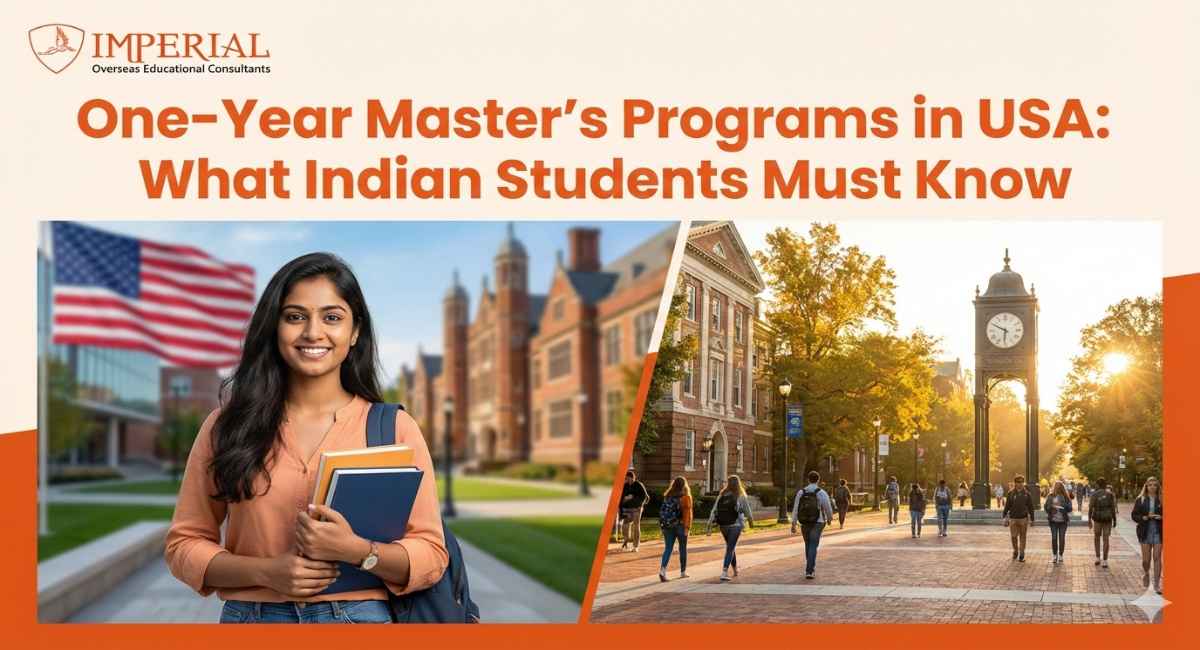
One-Year Master’s Programs in USA: What Indian Students Must Know
Confused about whether one year masters programs in USA are worth the cost, risk, and effort? Indian students often worry about tight timelines, job outcomes, and visa limits. This guide breaks down what actually works, what to avoid, and how to decide correctly.
Are One-Year Master’s Programs in the USA Right for Indian Students?
One-year master’s programs in the USA are fast-tracked degrees designed for students who want to enter the workforce quickly. Indian students are clearly interested because they will be spending less on living expenses, and start working in the US faster if they choose a shorter program.
However, these programs are not suitable for everyone. The compressed style means less time for classroom adjustment, networking, and internships. Students planning to study in USA through a one-year route must be academically prepared and career-focused from day one.
Which One-Year Programs Are Commonly Available?
Not all fields offer one-year formats. Indian students should be realistic about availability and intake competitiveness.
People often choose:
- Masters in Data Science – Often intensive, project-driven, and industry-aligned
- Masters in Business Analytics – Suitable for students with strong quantitative skills
- Masters in Finance – Usually offered as accelerated tracks for commerce or economics graduates
- Masters in Engineering – Limited to specific specialisations and universities
- Master in Computer Science – Rarely one year, usually requires prior CS background
- MBA in USA – One-year MBAs typically require 3–5 years of work experience
Verify program duration directly from the university website. Many “one-year” programs actually run for 15–18 months.
Cost vs Value: What Indian Families Should Evaluate
One-year programs might seem expensive at first, but you save a lot by not paying for a second year of rent and food. Even so, Indian families should check the cost in INR and see if they can get a loan that fits the shorter timeline.
Points to Remember:
- There is very little time to work part-time jobs on campus.
- Your loan approval depends on the subject you study and how famous the university is.
- You may find fewer scholarships compared to two-year courses.
Next Step: Speak with a loan expert and an education counselor before you decide.
How OPT and Work Opportunities Really Work
Post-study work is a big worry for students in India. Most STEM-designated one-year programs offer OPT eligibility, but the shorter academic timeline reduces internship windows.
Important facts:
- You have to begin getting ready for work in your first term.
- The OPT period is shorter for a non-STEM university.
- Delays in finding work can affect how long a visa is valid for.
Confirm whether your program qualifies for STEM OPT extension before applying.
Common Mistakes Indian Students Make
Many students choose one-year programs based on speed rather than suitability.
Avoid these assumptions:
- If one-year courses are “easier”
- Thinking that all of the courses will get you a job
- Ignoring the needs of the intake
- Thinking that university will not be very hard
Match your academic profile and career goals to the program structure, not just duration.
When a Two-Year Program May Be the Safer Choice
For students with limited exposure, switching fields, or relying heavily on internships, a two-year program may offer better flexibility. This is particularly important for people who are going into a Master in Computer Science program or moving into jobs that involve a lot of analytics.
- Inspirational: “Dream Big, Master in the USA“
- Professional: “Advance Your Career with a U.S. Master’s”
- Student-focused: “Your Master’s Journey Begins in America
If you need time to build skills or US work exposure, reconsider the one-year format.
FAQs
Yes, provided the university and curriculum are strong. Employers focus more on skills and experience than on program length.
Yes, but approval depends on the university, course, and co-applicant profile. Not all lenders treat them equally.
You can only participate in OPT if you are in a university and on a visa that allows it. It’s not always the case, and it depends on the training.
Yes, but you’ll need a very strong profile. Many of these programs are intensive and prefer students who already have some practical or research experience in their field.
The visa rules are the same, but your timeline is tighter. Because the course is short, you have less time to find an employer willing to sponsor you compared to a traditional two-year program.
Conclusion
One-year master’s programs in the USA can be powerful if chosen strategically. They are a good fit for students who are focused, have clear goals, a strong profile, and fair expectations. For some people, speed might make things riskier instead of safer.
Talk to an experienced study abroad consultant to get a look at your profile, make a list of the best universities, and make sure that a one-year program really fits your long-term goals.