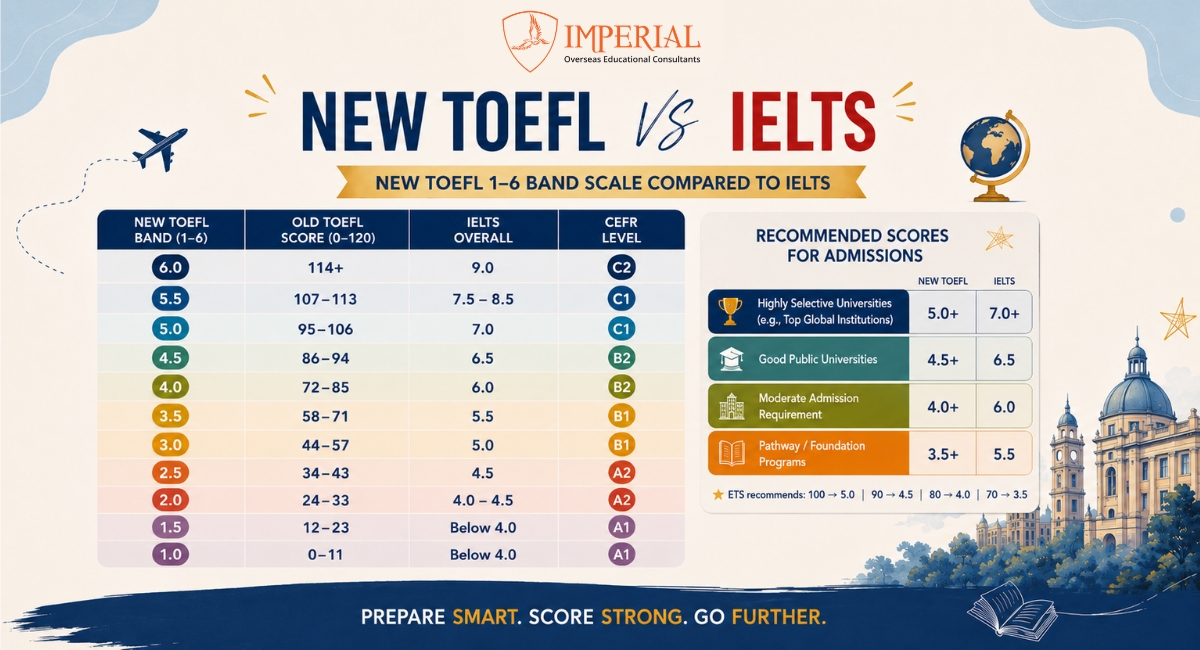
What the New TOEFL 1–6 Scale Means and How It Compares to IELTS?
The TOEFL scale score has undergone significant changes. The test is now scored on a 1–6 scale, rather than 0–120. This updated framework changes how international universities evaluate English language proficiency. Many students and parents feel confused about these recent updates. They wonder how they impact admission chances. They also want to see how it matches up with IELTS scores.
You need to understand these differences. Make sure to review them before choosing your English test. This simple guide breaks down everything you need to know about the current TOEFL scale score. Taking a few minutes to learn how they compare right now will save you a lot of headache later during your application process.
Understanding the New TOEFL 1–6 Scale
This new assessment framework was introduced by the Educational Testing Service (ETS). It was adopted in January 2026 to make the global evaluation metrics easier to understand. This 1–6 system links test results to the CEFR benchmarks and helps institutions assess applicants. The new scale provides overall English proficiency. It also provides section scores for Reading, Listening, Speaking, and Writing using the same 1–6 format.
TOEFL 1–6 Scale Breakdown
Every score level highlights specific strengths and weaknesses in your English. Knowing these score-level descriptors helps candidates focus on specific areas for improvement. The table below shows what each TOEFL scale score range generally represents.
| TOEFL Score | General Proficiency Level |
| 1–1.5 | Basic User |
| 2–2.5 | Elementary User |
| 3–3.5 | Intermediate User |
| 4–4.5 | Upper-Intermediate User |
| 5–5.5 | Advanced User |
| 6 | Expert User |
TOEFL vs IELTS Scale Score Comparison
Many universities accept both. Usually, the scores are compared to help the students know which test suits them best. Below is a breakdown to understand the score comparison.
| TOEFL Band Score | IELTS Band Score |
| 6 | 9.0 – 8.5 |
| 5.5 | 8.0 – 7.5 |
| 5 | 7 |
| 4.5 | 6.5 |
| 4 | 6 |
| 3.5 | 5.5 |
This table shows how each level aligns with a specific IELTS scale score equivalent. Admissions officers use these exact charts to compare students from different testing backgrounds fairly. IELTS calculates an overall band as the average of the 4 sections, rounded to the nearest 0.5 band. Knowing these helps candidates select the right exam. It takes away the guessing game so you can focus entirely on reaching your specific goal.
Key Differences Beyond Scores
These two popular tests are very different. They have different formats, test styles, and grading systems. The table below highlights the main differences to help you compare them more easily.
| Feature | TOEFL Exam | IELTS Exam |
| Delivery Mode | 100% Computer-Based | Paper or Computer Option |
| Speaking Section | Spoken to a Microphone | Face-to-Face Interview |
| Section Adaptation | Adaptive Reading & Listening | Non-Adaptive Fixed Sections |
| Essay Interaction | Typed on Keyboard | Handwritten or Typed |
| Accent Variety | Mainly North American | International Accents |
| Grading Technology | Combined AI + Human Raters | Human Examiners Only |
| Test Purpose | Strictly Academic Contexts | Academic & General Versions |
Your testing environment can significantly influence your comfort and performance during the exam. For instance, the IELTS scale score relies heavily on direct human interaction during the speaking module. Meanwhile, the TOEFL exam keeps students interacting solely with computer systems throughout the day. Picking the right testing room depends on your habits.
Which Test Should You Choose?
Deciding which test will vary. It is based on your personal strengths and preferred examination style. Your choice may also depend on the location of your future education. Select:
- TOEFL if you are heavily targeting American universities.
- IELTS if you want to relocate to the UK, Australia or Canada for studying.
- TOEFL if you feel very confident in quick typing and working with adaptive algorithms under tight deadlines.
- IELTS if you prefer having a real conversation with a human examiner during speaking tasks.
- TOEFL if you would like to complete your whole examination in the shortest ninety minutes.
Frequently Asked Questions
Yes, universities accept older IELTS scale score if they have not expired yet. Most of these test certificates last for exactly two years from your exam date.
It depends on how you like to take tests. It also depends on your English skills.
Yes, expert study abroad consultants analyze your academic background to suggest the easiest test. They provide personalized guidance based on university requirements and your skills.
The new rubric does not make scoring harder; it simply requires more precise answers. Consistent practice with official materials ensures students can achieve excellent results easily.
Final Thoughts
The improved TOEFL scale score structure provides a systematic way to evaluate communication skills at a global level. While both TOEFL and IELTS tests are equally acceptable, the best choice is determined by the specific objectives you have, your preferences in taking tests, and university demands.
Make sure that you analyze all the aspects of the test before booking an exam. The comparison between TOEFL scores and other language proficiency scores will be beneficial for you in determining which test suits you best and how you can enhance your chances for success in the application process to study abroad.
Contact Imperial Overseas today for personalized guidance on university admissions.